Sympathetic vs Parasympathetic Nervous System
How your body handles stress, settles down, and supports recovery
Have you ever felt your heart race after a sudden scare? Or noticed how different you feel once you have a chance to relax? Two parts of your nervous system help make these changes happen: the sympathetic and parasympathetic nervous systems. They help manage automatic jobs, such as your heartbeat and digestion. Understanding them can help you see why both activity and recovery matter for your health.
The sympathetic nervous system gets you ready for action
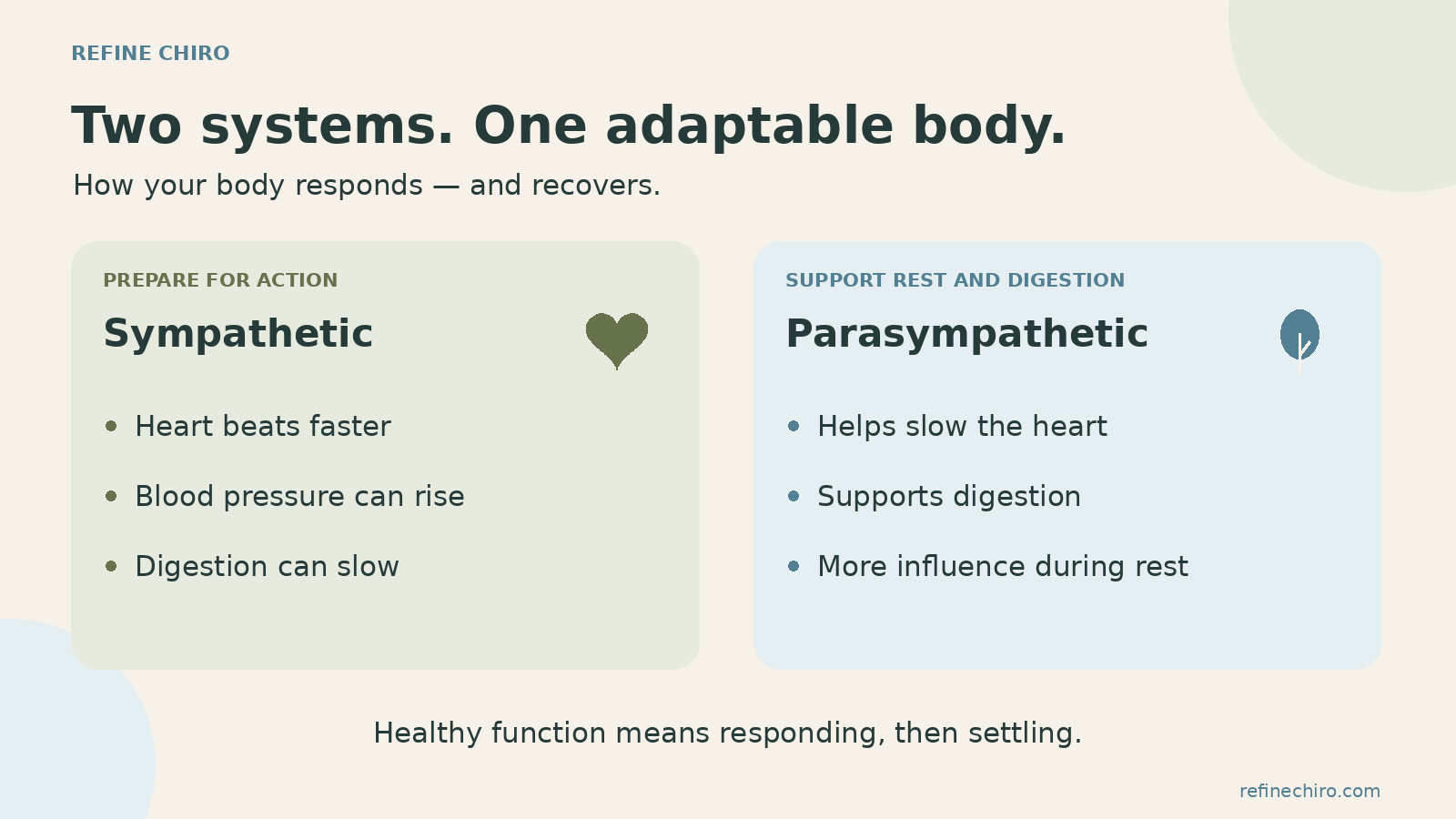
The sympathetic nervous system is often called the “fight or flight” system. It helps your body respond when something demands your attention or effort.
Imagine needing to run away from danger or react quickly to a threat. Your heart beats faster and pumps more strongly, and your blood pressure can rise. Blood flow is redirected toward the muscles needed for action, including those in your arms and legs, so they receive more oxygen and fuel. At the same time, blood flow to digestive organs can decrease, and the movement of food and release of digestive enzymes and acid can slow. Your body is giving priority to meeting the immediate challenge. [1,2]

The kidneys also play a major role in long-term blood pressure control by adjusting how much salt and water the body keeps. During a strong sympathetic response, blood vessels supplying the kidneys can narrow, reducing blood flow. Sympathetic signals can also stimulate release of renin, which starts a chain reaction that narrows blood vessels and encourages salt and water retention. These responses help support blood pressure during a challenge. [17]
This response is useful when you need it. The sympathetic system also helps you meet everyday physical demands, such as exercising. Once the demand passes, your body needs opportunities to settle and return toward its usual resting activity.
The parasympathetic nervous system helps you settle down
The parasympathetic nervous system is often called the “rest and digest” system. It helps slow your heart and supports digestion, including moving food through your digestive tract. [1,2]
Think about the period after a busy day, when you can sit down and take a break. This branch supports many of the quieter jobs your body needs to do.
The two systems work together throughout the day. Their activity changes according to what your body needs. Healthy function means being able to respond to a demand and settle afterward. It does not mean staying relaxed all the time.
Why stress and recovery matter for long term health
Modern life can trigger the stress response even when you are not in physical danger. Sitting in traffic, facing a work deadline, worrying about bills, having a difficult conversation, or feeling pressured by constant notifications can all be experienced as stressful. The brain can interpret these demands as threats and activate a protective response. Even replaying an upsetting event or worrying about something that has not happened can keep the response going. The body may prepare for action while you are sitting still. When these demands pile up, sympathetic responses may be repeatedly activated, leaving less time to settle.
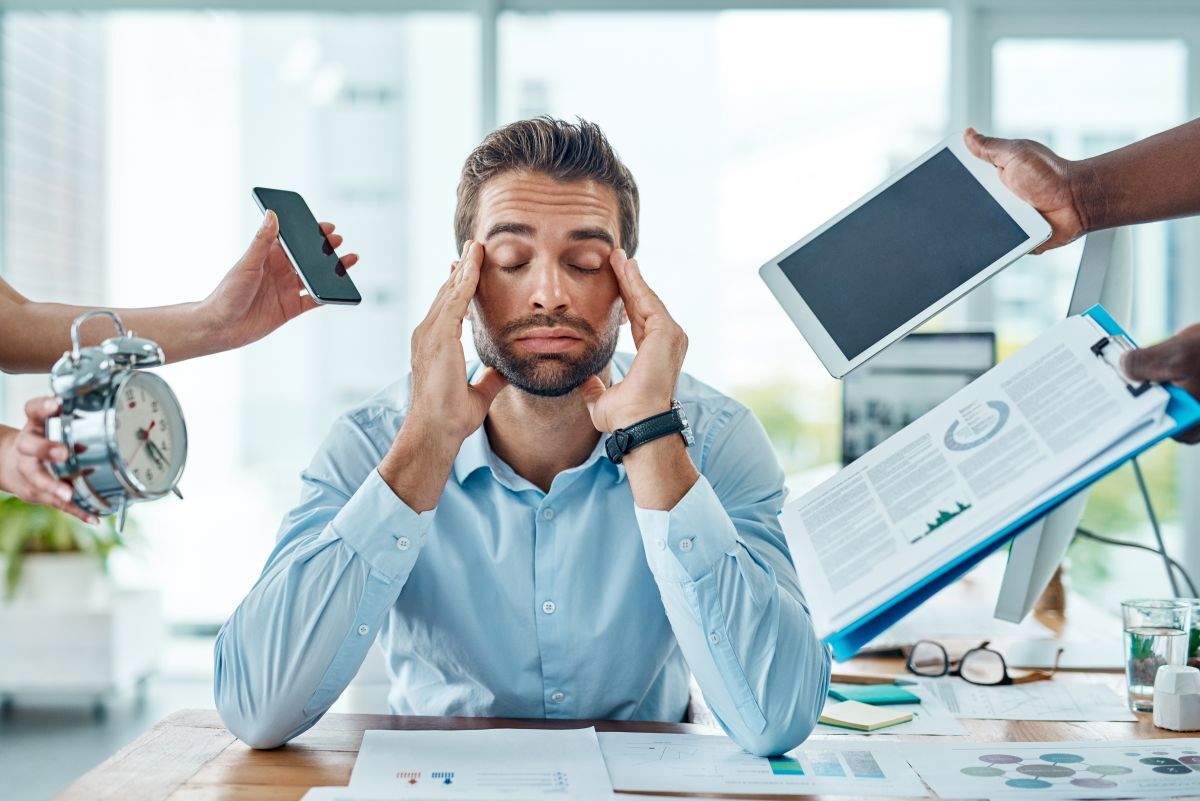
For the heart, repeated sympathetic activation can mean more frequent periods of faster, stronger beating and higher blood pressure. This increases the heart’s workload and places additional demands on blood vessels. When stress is frequent and recovery is limited, these repeated demands can add strain to the cardiovascular system. Chronic stress can contribute to high blood pressure and other heart disease risk factors. Stress hormones can also affect how the body controls inflammation. [3,4,18]
Sleep gives these systems a daily opportunity to shift toward rest. During the quieter stages of sleep, sympathetic activity generally decreases, while parasympathetic activity helps slow the heart. Blood pressure also falls, easing the heart’s workload. During dreaming sleep, sympathetic activity can rise again as part of the normal sleep cycle. Too little sleep can increase sympathetic activity and make blood sugar harder to manage. Poor sleep over time is also linked with higher risks of high blood pressure and heart disease. These connections help explain why regular sleep matters for long-term health. [5,9]
Chronic diseases have many causes, but the way these two systems respond to stress and rest is part of the picture. Supporting recovery means giving your body opportunities to settle after a challenge, alongside the care you need for your particular condition.
Your nervous system can learn and change
Neuroplasticity means your brain and nervous system can change with experience. When ongoing stress repeatedly activates the sympathetic nervous system, the body spends more time preparing for action. Over time, repeated stress can affect both chemical signals and physical connections in the brain. Networks that detect threats can become more responsive, while attention, memory, and emotional regulation can be affected. The nervous system may become accustomed to reacting with heightened alertness. [3,13]
Supporting recovery means helping the body shift toward greater parasympathetic influence during periods of rest. This helps slow the heart and supports digestion. Comfortable breathing, quality sleep, and reducing ongoing stress give the body regular opportunities to settle. As stress eases, some stress-related changes in brain function can improve. The goal is to recover well between demands and create better conditions for learning more helpful responses.
We can pair this recovery with regular movement practice. Proprioception—your body’s sense of position and movement—provides the brain with information from muscles and joints. Carefully chosen movement and coordination exercises give the nervous system opportunities to practice useful skills. Repetition helps these skills become more stable. Studies have shown that treatment combining sensory and movement retraining can improve pain and function in people with chronic low back pain. Together, recovery and practice offer a way to work with the body’s ability to adapt. [11,12]
Simple ways to support recovery
Start with one habit you can repeat:
Take a comfortable breathing break. Sit comfortably and relax your shoulders. Breathe gently through your nose, aiming to inhale for 5 to 6 seconds and exhale for the same length of time. Let the breath flow smoothly, without holding it or forcing a deep breath. Practice for a few minutes, using a shorter count if needed to stay comfortable. Research suggests brief daily breathing practices can improve mood and support relaxation. [7,14]

Make room for sleep. Keep a regular bedtime and give yourself time to wind down. During the hour before bed, limit phone, tablet, computer, and television use, and dim bright room lights. Evening light can signal the brain that it is time to stay awake and can suppress melatonin, a hormone that helps time your sleep. A quieter routine with softer lighting gives your brain a clearer signal that the day is ending. [15,16]
Move regularly. A walk or activity suited to your abilities is a useful place to start. Regular movement supports long-term health and lowers the risk of several chronic conditions. [8]
Supporting your body’s ability to heal
At Refine Chiro in Mandeville, we believe the body has an innate ability to heal and adapt. Caring for your nervous system begins with understanding its needs: the ability to meet a challenge, followed by time and support for recovery.
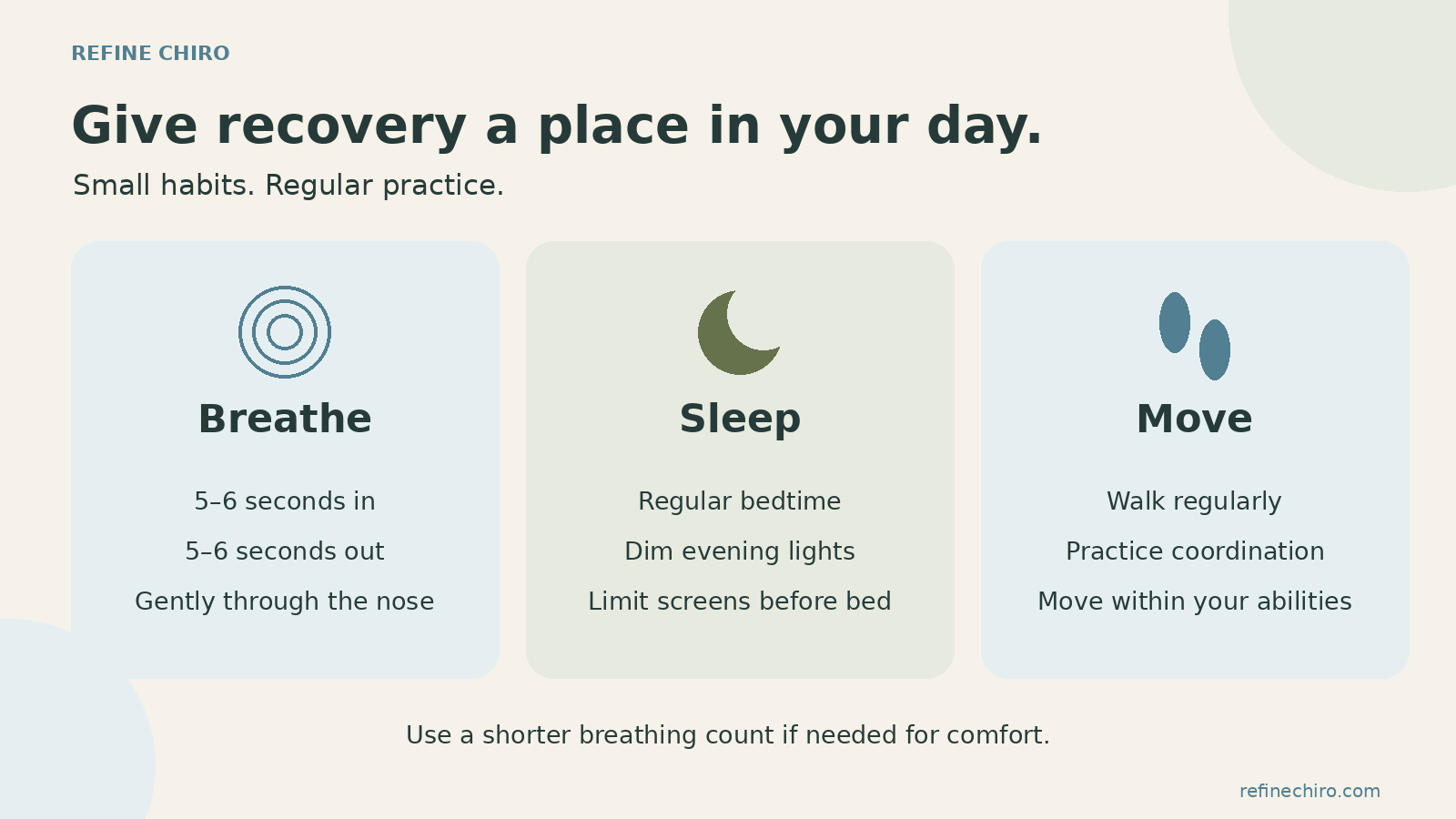
Choose one small step this week: a breathing break, a regular bedtime, or a daily walk. If pain or stiffness is making movement difficult, our team can help you explore an appropriate care plan.
Learn about becoming a new patient
Related reading: What Really Happens When You Stretch
Questions and answers
1. What is the difference between the sympathetic and parasympathetic nervous systems?
The sympathetic system prepares your body for action, including making your heart beat faster. The parasympathetic system helps slow your heart and supports digestion during rest. Both are important. Your body needs to respond to a challenge and then settle afterward.
2. Can everyday worries trigger the fight-or-flight response?
Yes. Your brain can respond to work deadlines, traffic, money worries, or an upsetting conversation as stressful, even when you are physically safe. Replaying a worry can keep that response going. Regular opportunities to rest help your body settle between demands.
3. How can spending too much time in a stress response affect long-term health?
Repeated sympathetic activation can mean more periods of faster heartbeats and higher blood pressure. It can also slow digestion and signal the kidneys to retain more salt and water. Over time, frequent stress with too little recovery can add strain to the body and contribute to heart disease risk factors.
4. How does sleep help these two systems?
During the quieter stages of sleep, sympathetic activity generally decreases, and parasympathetic activity helps slow the heart. Blood pressure also falls. Too little sleep can increase sympathetic activity and make blood sugar harder to manage, which helps explain the connection between sleep and long-term health.
5. Can my nervous system learn healthier patterns?
Yes. This ability to change with experience is called neuroplasticity. Reducing ongoing stress and practicing movement give the nervous system opportunities to adapt. Movement provides information about body position and coordination, called proprioception. Studies have shown that sensory and movement retraining can improve pain and function in people with chronic low back pain.
6. What is a simple way to support recovery each day?
Try a few minutes of gentle nasal breathing, aiming for a 5- to 6-second inhale and an equally long exhale. Shorten the count if needed to stay comfortable. Keep a regular bedtime, dim lights and limit screens during the hour before bed, and make time for regular movement. Start with one habit you can repeat.
Sources
The numbers in the article point to the supporting sources below.
[1] OpenStax. Anatomy and Physiology 2e. Divisions of the Autonomic Nervous System. Read source
[2] OpenStax. Anatomy and Physiology 2e. Autonomic Reflexes and Homeostasis. Read source
[3] McEwen BS, Gianaros PJ. Stress- and allostasis-induced brain plasticity. Annual Review of Medicine. 2011;62:431–445. Read source
[4] Cohen S, et al. Chronic stress, glucocorticoid receptor resistance, inflammation, and disease risk. PNAS. 2012;109:5995–5999. Read source
[5] National Heart, Lung, and Blood Institute. How Sleep Works: Why Is Sleep Important? Read source
[6] Ashar YK, et al. Effect of pain reprocessing therapy vs placebo and usual care for patients with chronic back pain: a randomized clinical trial. JAMA Psychiatry. 2022;79:13–23. Read source
[7] Balban MY, et al. Brief structured respiration practices enhance mood and reduce physiological arousal. Cell Reports Medicine. 2023;4:100895. Read source
[8] U.S. Department of Health and Human Services. Physical Activity Guidelines Questions and Answers. Read source
[9] Spiegel K, Leproult R, Van Cauter E. Impact of sleep debt on metabolic and endocrine function. The Lancet. 1999;354:1435–1439. Read source
[10] Woolf CJ. Central sensitization: Implications for the diagnosis and treatment of pain. Pain. 2011;152:S2–S15. Read source
[11] Xu T, et al. Rapid formation and selective stabilization of synapses for enduring motor memories. Nature. 2009;462:915–919. Read source
[12] Bagg MK, et al. Effect of graded sensorimotor retraining on pain intensity in patients with chronic low back pain: a randomized clinical trial. JAMA. 2022;328:430–439. Read source
[13] Liston C, McEwen BS, Casey BJ. Psychosocial stress reversibly disrupts prefrontal processing and attentional control. PNAS. 2009;106:912–917. Read source
[14] Lin IM, Tai LY, Fan SY. Breathing at a rate of 5.5 breaths per minute with equal inhalation-to-exhalation ratio increases heart rate variability. International Journal of Psychophysiology. 2014;91:206–211. Read source
[15] National Heart, Lung, and Blood Institute. Sleep Deprivation and Deficiency: Healthy Sleep Habits. Read source
[16] Chang AM, Aeschbach D, Duffy JF, Czeisler CA. Evening use of light-emitting eReaders negatively affects sleep, circadian timing, and next-morning alertness. PNAS. 2015;112:1232–1237. Read source
[17] OpenStax. Anatomy and Physiology 2e. Regulation of Renal Blood Flow. Read source
[18] National Heart, Lung, and Blood Institute. Heart-Healthy Living: Manage Stress. Read source