


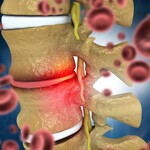



Herniated Disc, Bulging Disc, or Blown Disc:
What's Really Going On
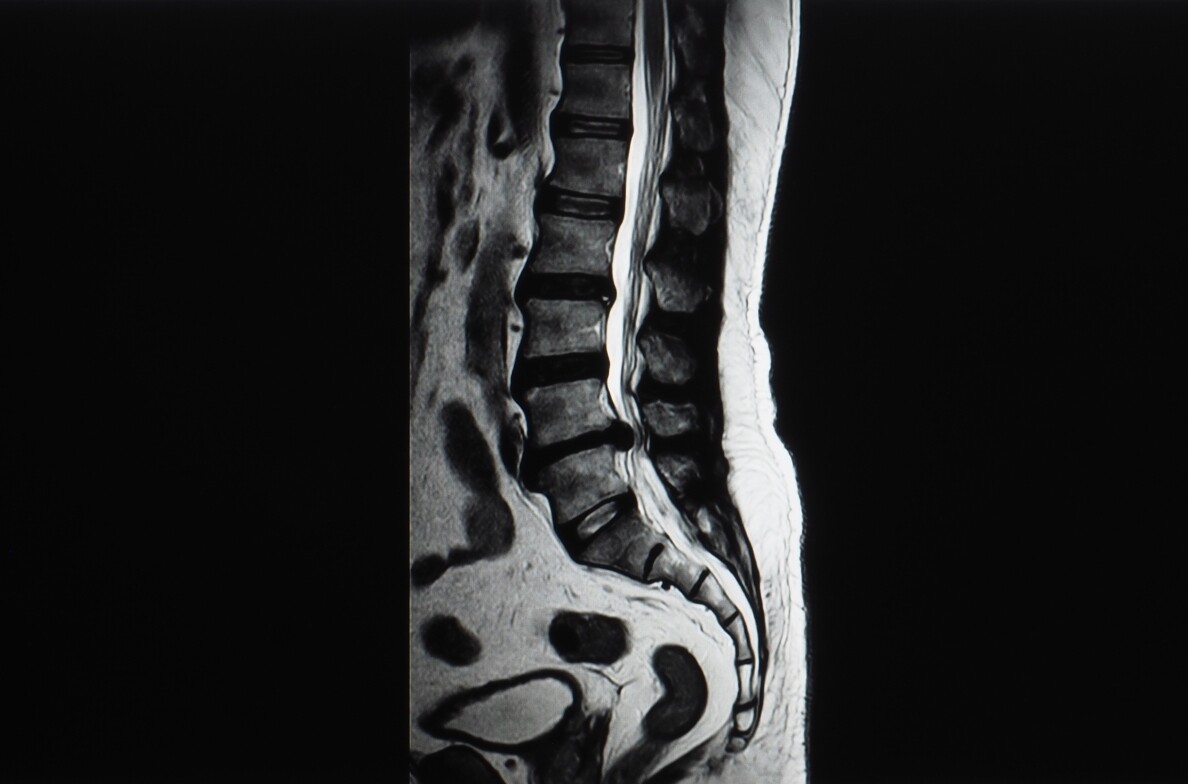
Have you been told you have a disc injury, herniated disc, blown disc, or ruptured disc — and you're not totally sure what any of that means? You're not alone. These terms get used interchangeably, but they don't always describe the same thing, and understanding the difference can help you make better decisions about your treatment and recovery.
At Refine Chiro in Mandeville, LA, we see this question from patients across the Northshore and Greater New Orleans area every week. Here's what's actually happening inside your spine — and what you can do about it.
What Is a Lumbar Disc Injury?
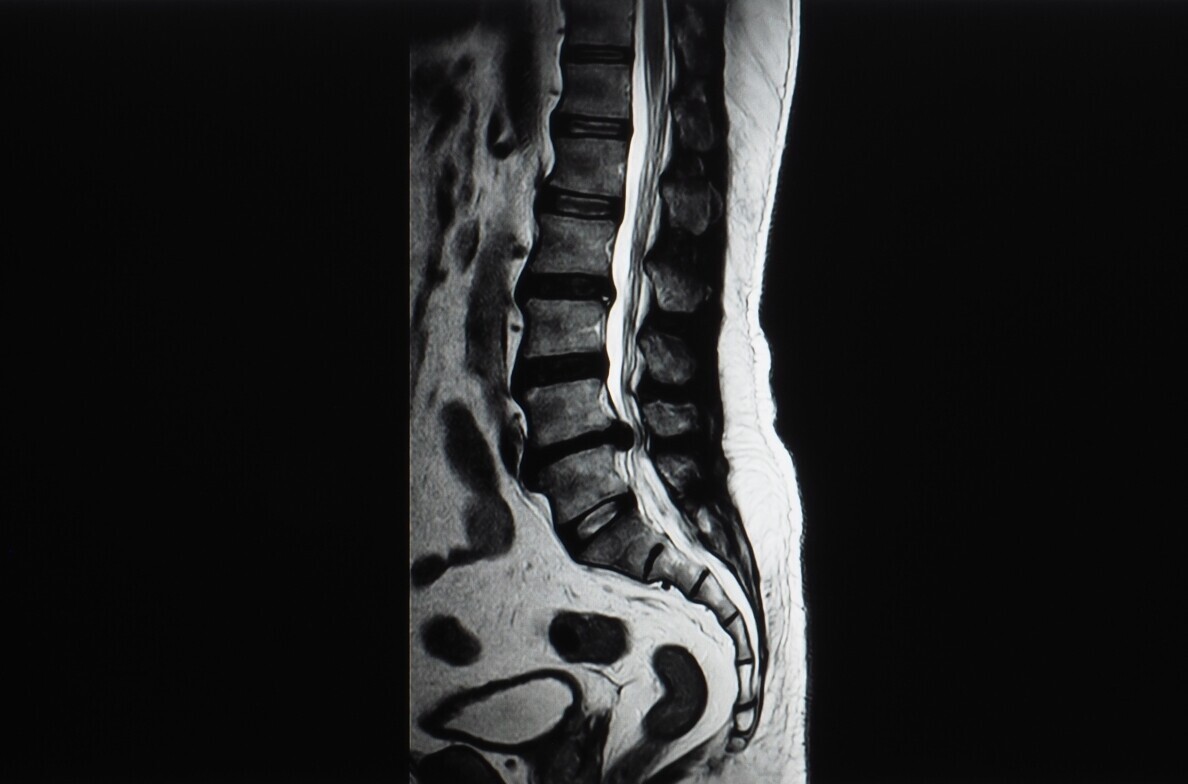
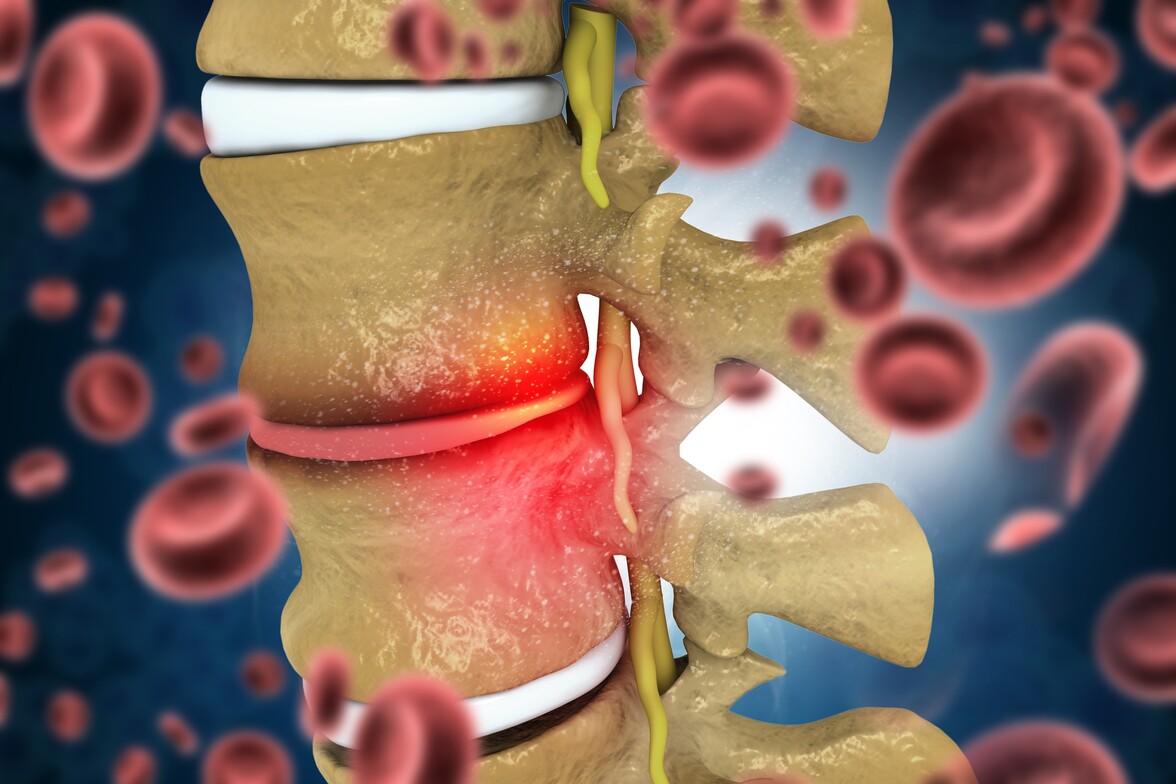
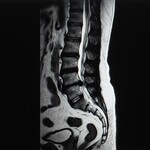
A disc injury is a broad term for any damage to one of the spinal discs.
- Herniated disc — the soft inner material pushes through a tear in the disc's outer layers.
- Ruptured disc — a more severe herniation where the outer fibers have torn significantly.
- Blown disc — not a medical term, but a phrase patients often use to describe a painful disc injury.
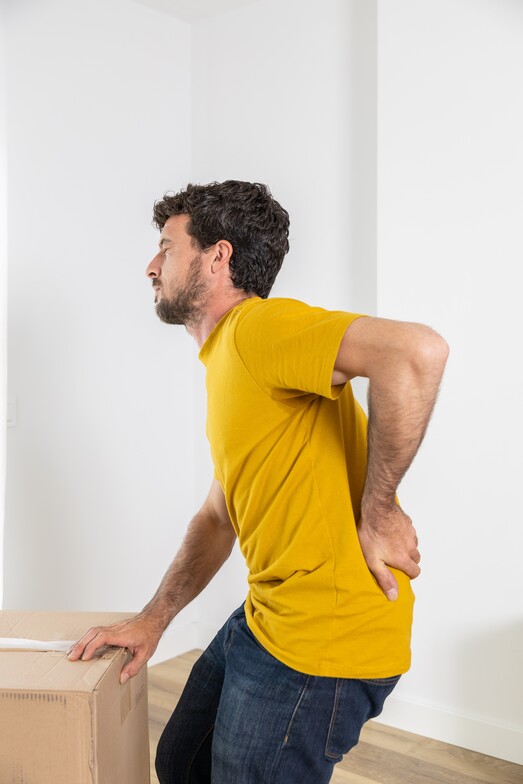
Regardless of the label, these injuries usually involve the lumbar (lower back) spine and can cause back pain, sciatica, numbness, weakness, and difficulty with everyday activities.
What Is a Lumbar Disc, Exactly?
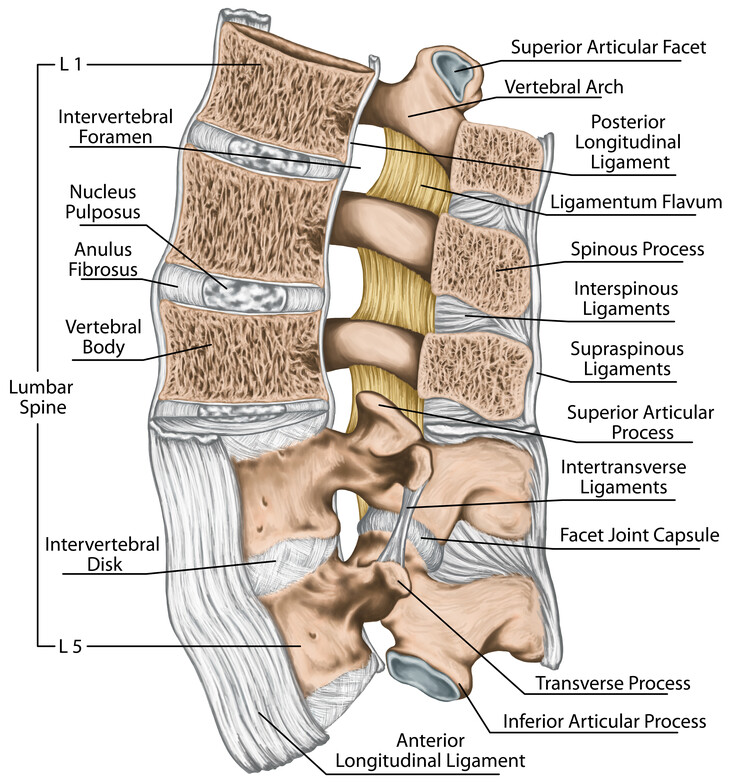
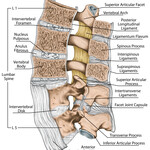
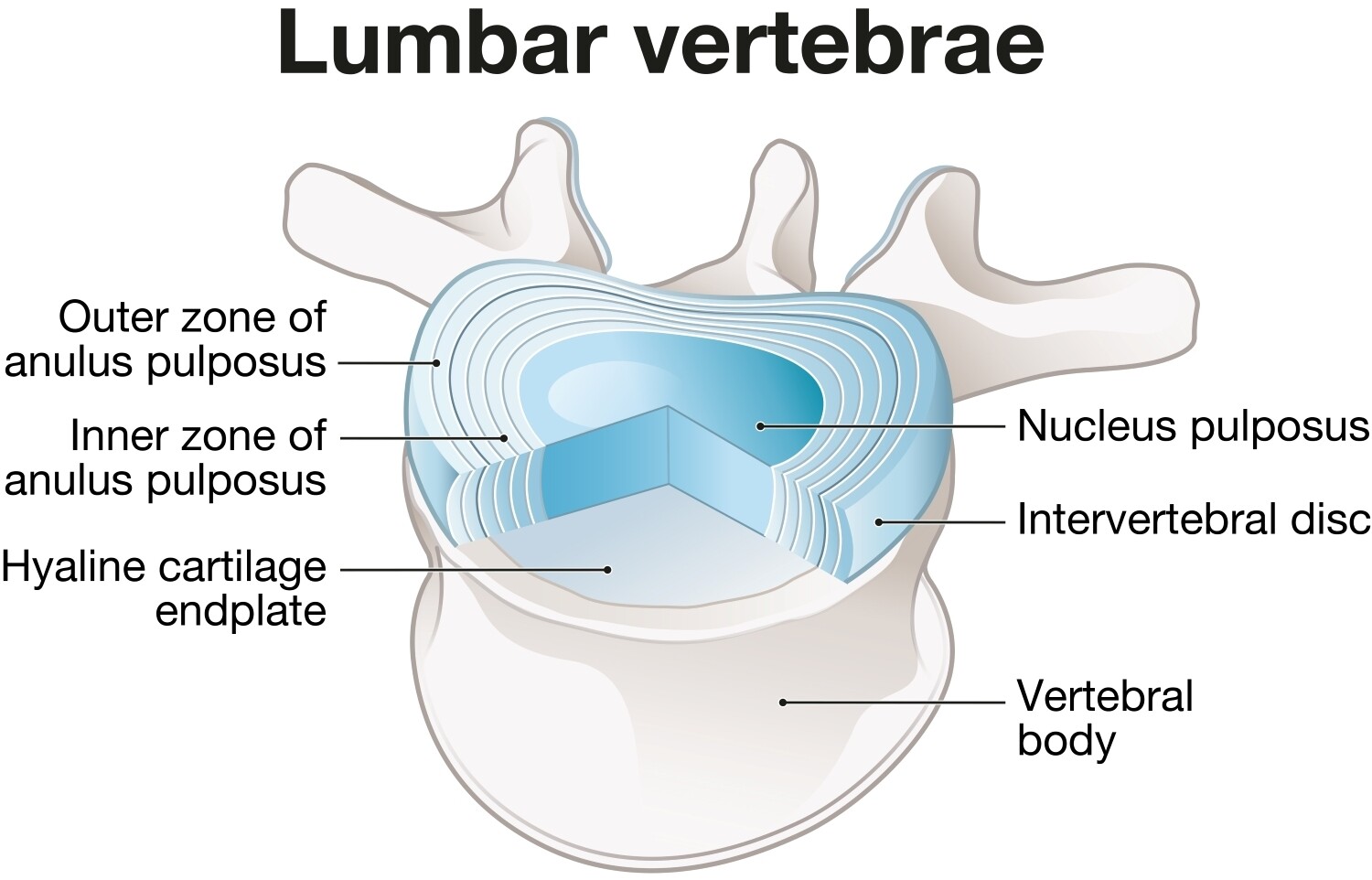
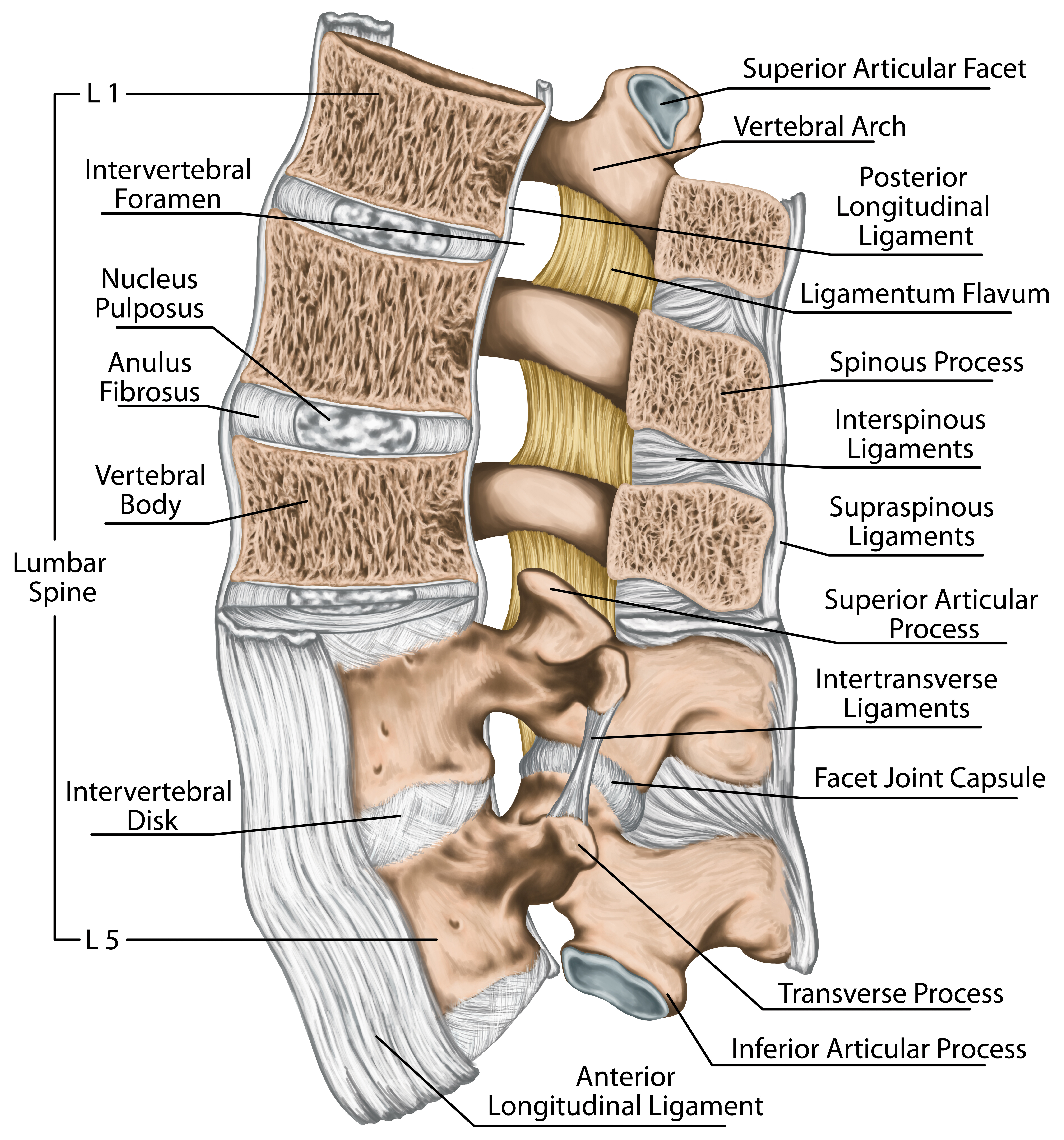
Your lumbar spine carries the weight of your entire upper body and transfers it through your pelvis, legs, and feet to the ground. It contains five vertebrae, separated by intervertebral discs that act as shock absorbers while letting your spine bend, twist, and move.
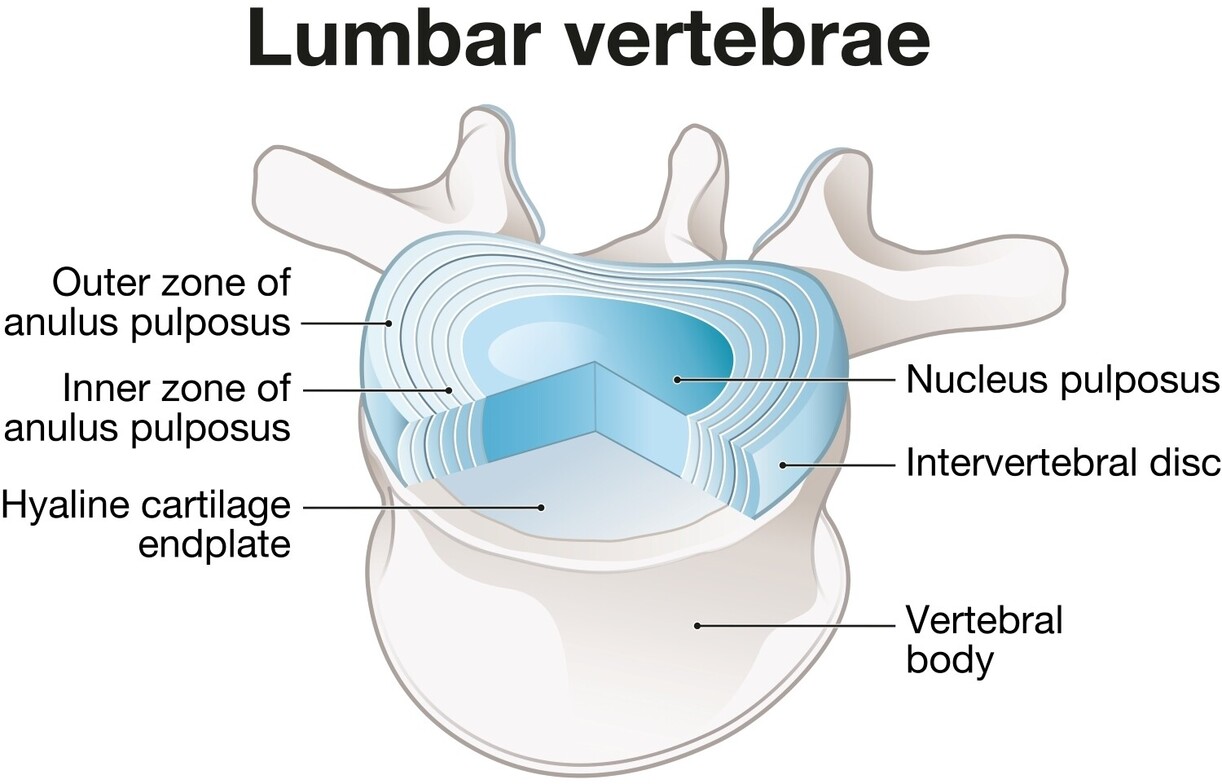
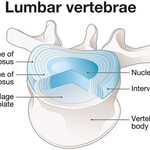
Each disc has three parts:
- Annulus fibrosus — strong, concentric rings of collagen fibers that provide strength and stability
- Nucleus pulposus — the soft, gel-like center that distributes pressure throughout the disc
- Cartilaginous endplates — thin layers of cartilage that anchor the disc to the vertebrae and let nutrients in
Why Disc Injuries Heal So Slowly
Unlike muscles, discs have very little direct blood supply — and that single fact explains almost everything about why disc injuries take longer to heal than a pulled muscle or a sprained ankle.
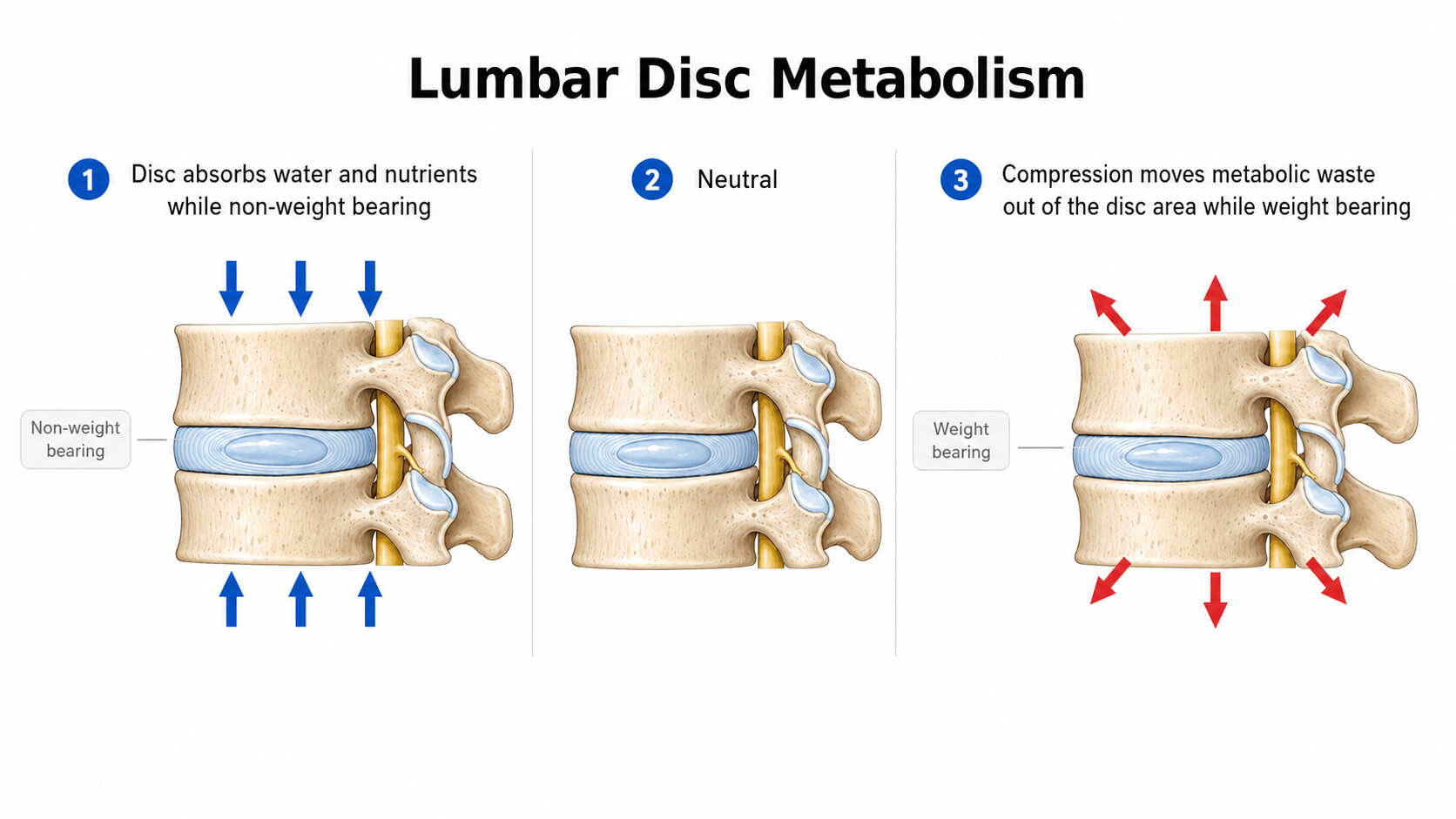
Instead of nutrients arriving through blood vessels, disc cells depend on diffusion through the cartilaginous endplates — since adult intervertebral discs have almost no direct blood supply of their own.
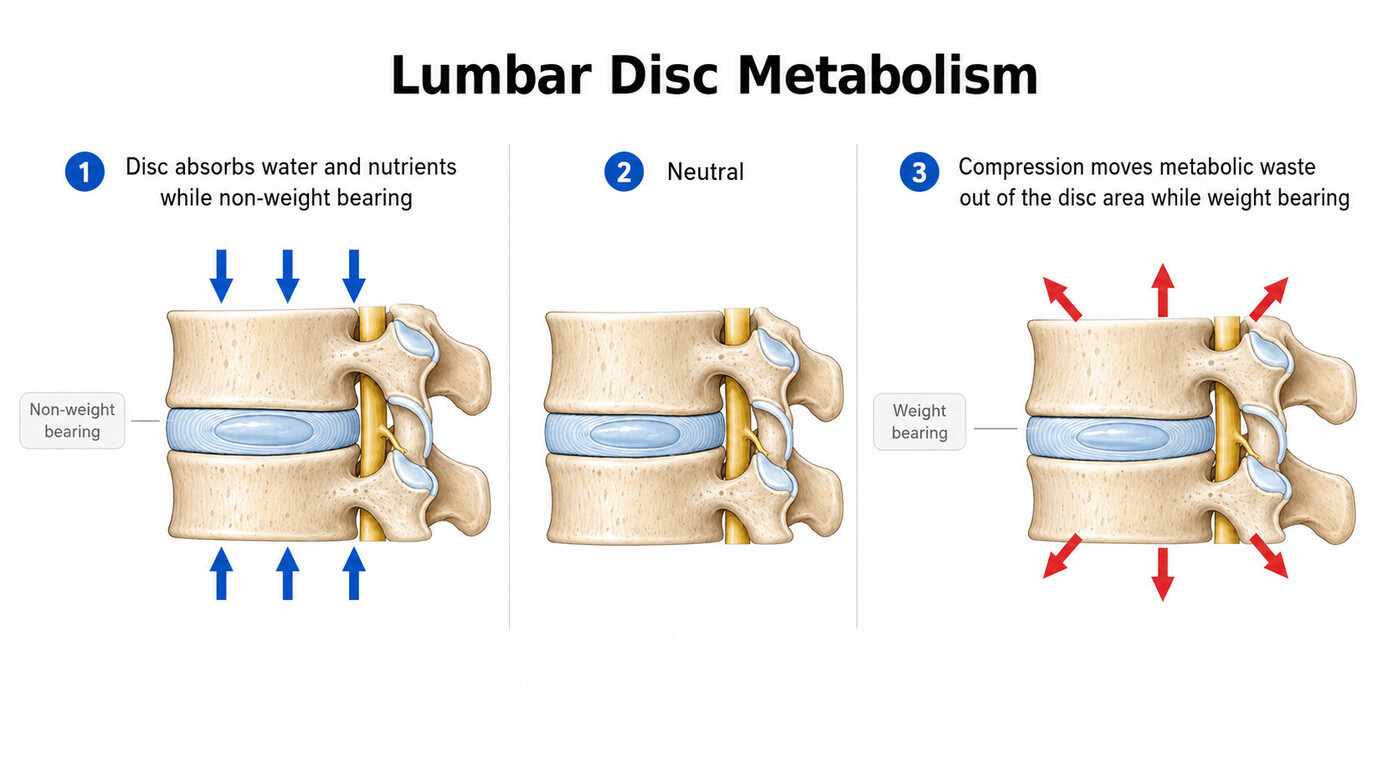
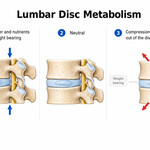
This works through a 24-hour cycle called imbibition:
- Night (unloading): while you sleep, pressure on the discs drops, and they reabsorb water, oxygen, and nutrients from the surrounding vertebrae.
- Day (loading): as you stand, walk, and lift, compression pushes fluid — and metabolic waste like carbon dioxide and lactate — back out of the disc.
Because this exchange depends on slow diffusion rather than direct circulation, disc cells have one of the lowest metabolic rates in the body — and every part of healing (collagen production, tissue remodeling, cellular repair) happens more slowly as a result. This is a major reason lumbar disc injuries often take months, not weeks, to heal.
The Soft Tissues That Matter
When people think of the spine, they usually picture bones. However, most lumbar spine injuries involve soft tissues.
These include:
- Intervertebral discs
- Spinal ligaments
- Facet joint capsules
- Tendons
- Muscles
- Nerve roots
Did You Know? Your spinal discs lose a small amount of height during the day as they compress under body weight. While you sleep, they gradually rehydrate through a process called imbibition, absorbing water and nutrients that help keep the discs healthy.
The annulus fibrosus contains dozens of layers of collagen fibers arranged in alternating directions, giving the disc remarkable strength. However, repeated stress can eventually create microscopic tears within these layers. Once enough fibers fail, the nucleus pulposus begins pressing outward, producing a bulge or herniation.
How Lumbar Disc Injuries Really Happen
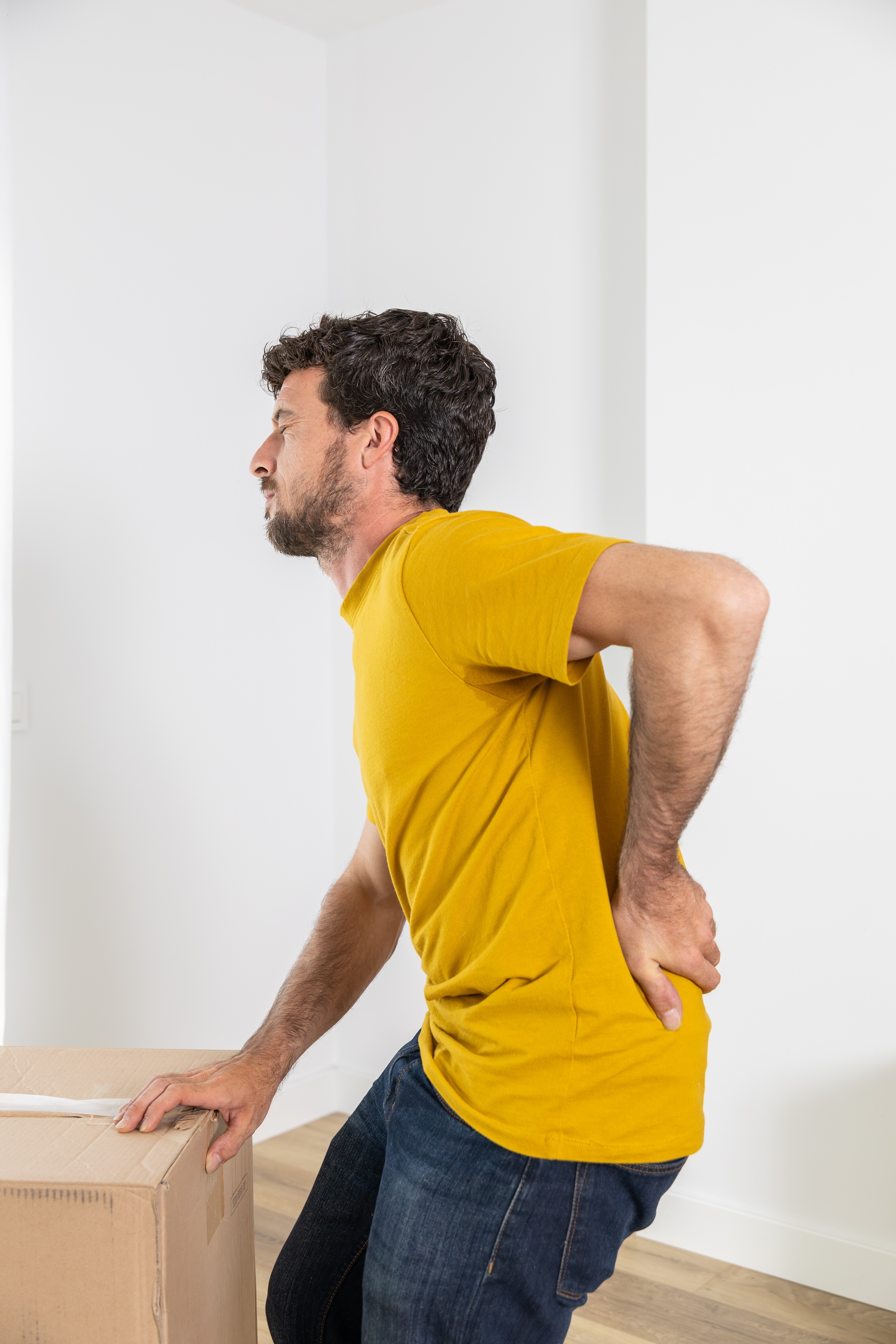
Most people assume a herniated disc comes from "lifting something wrong." Sometimes that's true. More often, the injury has been building for years.
1. Microtrauma: The Injury You Never Notice
Many disc injuries don't start with a dramatic event — they build through microtrauma, tiny amounts of tissue damage that accumulate over months or years.
Common contributors include:
- Prolonged sitting
- Repetitive bending or lifting
- Twisting while lifting
- Poor posture
- Weak core musculature
- Lack of regular strengthening exercise
- Poor movement mechanics
- General physical deconditioning
Your body normally repairs this kind of damage. But because discs have such a slow metabolism, repair can't always keep up — and thousands of tiny injuries accumulate faster than they can heal.
2. Degeneration
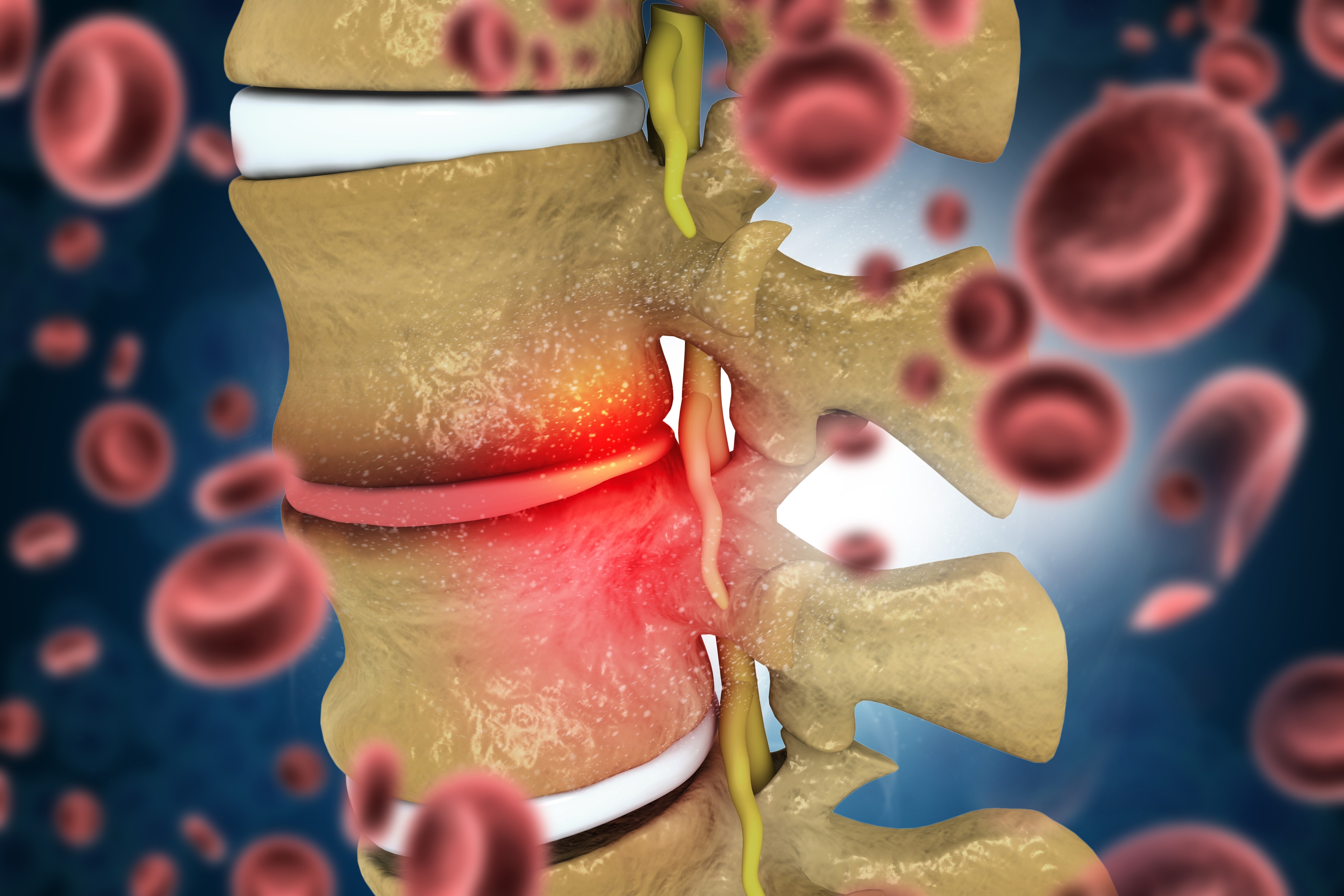
As collagen fibers weaken, small tears develop, water content drops, disc height declines, and load distribution becomes uneven. The disc becomes less able to handle normal daily forces.
3. Herniation
Eventually, one more movement — sometimes as simple as bending to tie a shoe — creates enough pressure for the nucleus pulposus to push through the weakened fibers.
Common myth: Most people think a herniated disc happens from one bad lift. In reality, it's usually years of small stresses outpacing the disc's ability to repair itself — the "sock" or the "shoelace" is just the final straw.
Why Disc Injuries Cause Pain, Numbness & Sciatica
A disc injury rarely stays contained to just the disc. Because nearby joints, muscles, ligaments, and nerves all work together, irritation in one area tends to spread.
After an injury, your body sends extra blood, fluid, and healing cells to the area — a normal, necessary inflammatory response that also causes swelling. Since the nerves in your lower back travel through very small openings in the spine, even mild swelling can crowd that space and irritate a nerve.
Depending on which nerves are affected, you may notice:
- Pain in your lower back near the injured disc
- Pain radiating into your buttock, hip, or leg (often called sciatica)
- Numbness or tingling in your leg or foot
- Muscle weakness that makes walking, stair climbing, or lifting your foot harder
- Muscle spasms, as your body guards the area to protect it from further injury
The good news: as inflammation settles and normal movement returns, these sensitive tissues come under less stress — which is usually when pain starts to ease, and mobility starts to come back.

Why Motion Helps Disc Health
Because discs depend on diffusion rather than direct blood flow, movement isn't optional — it's part of the healing process. Walking and gentle spinal movement help:
- Pump nutrients into the disc
- Remove metabolic waste
- Improve hydration
- Support tissue healing
This is one reason prolonged bed rest is rarely recommended for most uncomplicated disc injuries — ongoing movement has been linked to healthier disc status and muscular endurance.
How Chiropractic Care May Help
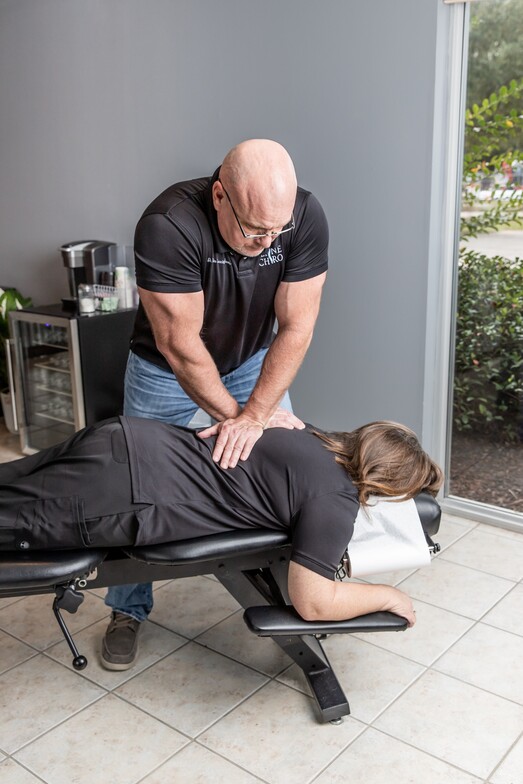
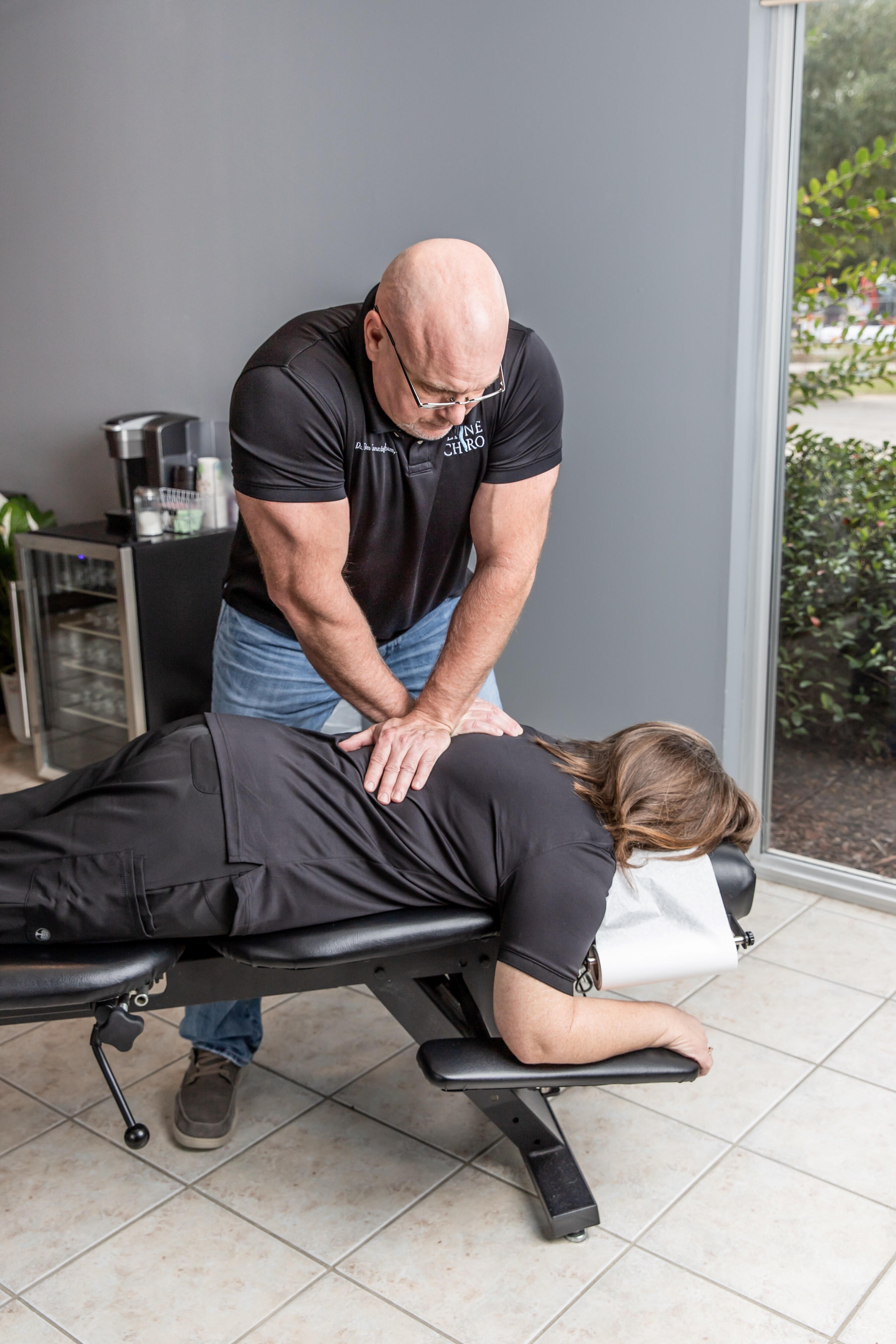
Chiropractic care can't "push a disc back into place." What it can do, as part of a broader plan, is support the structures around the injury:
- Improving spinal function and motion
- Reducing mechanical stress on the injured area
- Decreasing muscle guarding, tightness, and spasm
- Improving joint function
- Supporting healthier movement patterns
- Helping you return to activity safely
Your treatment plan depends on your specific injury, symptoms, and exam findings — we build it around what your body's data tells us, not a one-size-fits-all checklist.
Can a Herniated Disc Heal on Its Own?
Yes — in some cases. Research suggests the body can gradually reduce the size of some herniations through natural inflammatory and immune processes.
Healing depends on several factors, including:
- Overall health
- Size of the injury
- Smoking status
- Nutrition
- Activity level
- Mechanical stress placed on the spine
Because disc metabolism is slow, recovery takes patience and consistent, appropriate care.
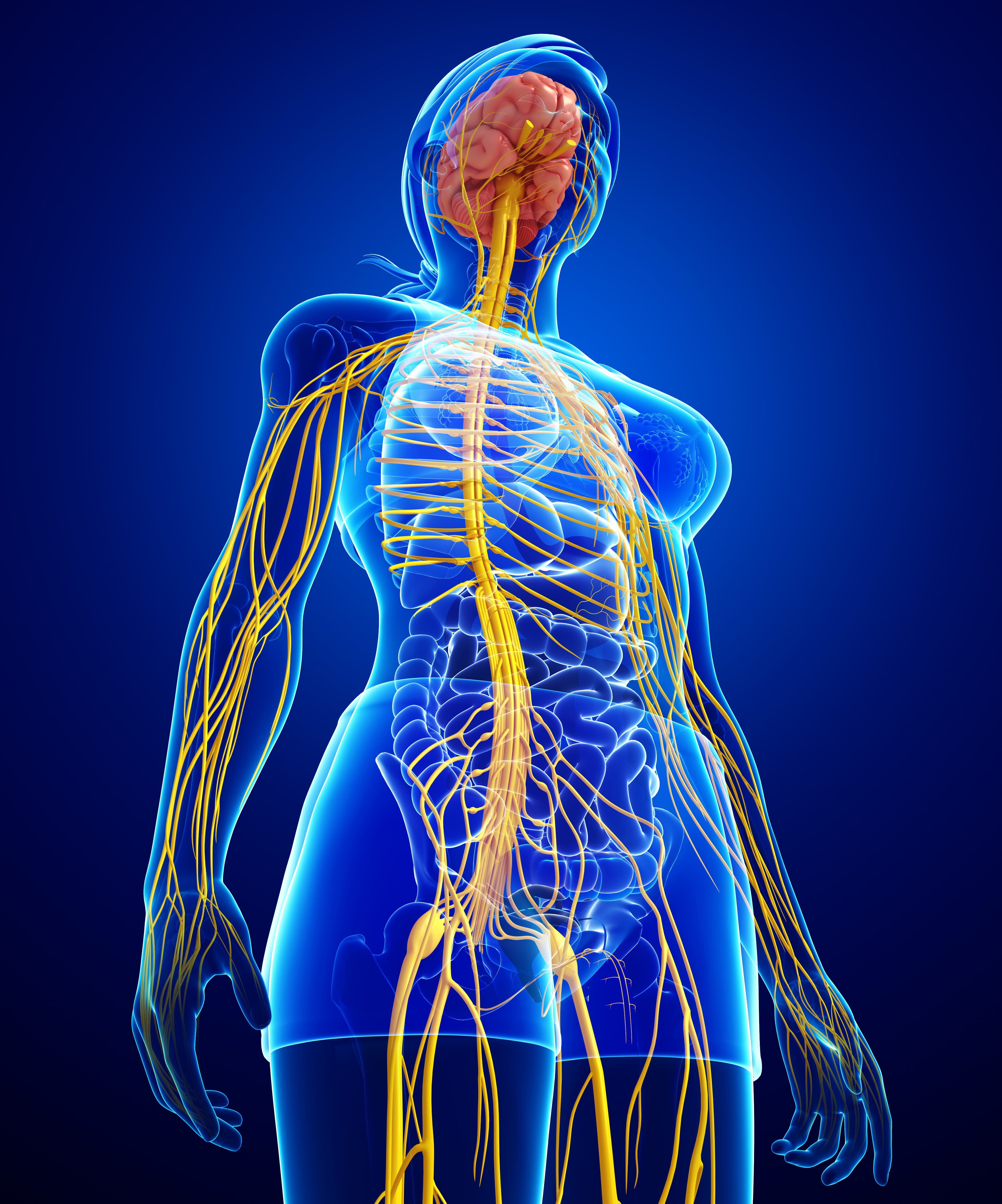
Healing the Disc Also Helps the Nervous System
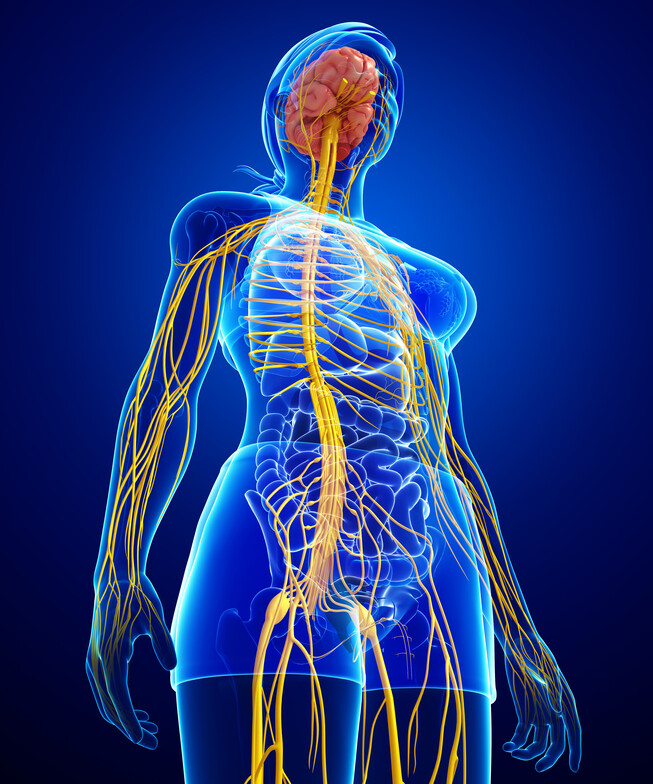
A lumbar disc injury doesn't just affect the tissue in your back — it can change how your nervous system processes pain. When pain lingers for weeks or months, the brain and spinal cord can become more sensitive, a process called neuroplasticity.
The encouraging part: neuroplasticity works both ways. As the disc heals, inflammation decreases, and movement improves, your nervous system starts receiving healthier, more accurate signals from your spine. Combined with gradual exercise, strength training, quality sleep, and appropriate care, this can support the development of more efficient neural pathways — and less pain over time.
Frequently Asked Questions
How long does a lumbar disc injury take to heal?
Many people improve within six to twelve weeks, though larger injuries may continue remodeling for several months. Recovery depends on the severity of the injury and your individual health factors.
Is a blown disc the same as a herniated disc?
"Blown disc" isn't a medical term — it's a phrase patients use to describe a painful herniated or ruptured disc.Can chiropractic care help a herniated disc? Many patients with lumbar disc injuries benefit from conservative chiropractic care as part of a broader treatment plan. The right approach depends on your diagnosis and a thorough exam.
Can exercise make a disc worse?
The wrong movements can aggravate symptoms, but appropriately prescribed exercise is often an important part of recovery.
Do I need surgery for a herniated disc?
Not always. Many disc injuries respond well to conservative, non-surgical care first. Whether surgery is ever appropriate depends on your imaging, symptoms, and how you respond to conservative treatment.
You Don't Have to Live With This
Back pain, sciatica, and disc injuries can feel like they're taking over your life — but you don't have to just manage the symptoms and hope they fade. If you're in Mandeville, Covington, Madisonville, Abita Springs, Slidell, Metairie, or anywhere on the Northshore or Greater New Orleans area, Refine Chiro is here to help you find the root cause and build a plan that actually helps you heal.
Ready to get to the bottom of your back pain? Book your consultation with Dr. Tim Cunningham today, or learn more about chiropractic care at Refine Chiro.
Learn more about sciatica and disc injuries in this video:

Tim Cunningham
Contact Me


.png)
