


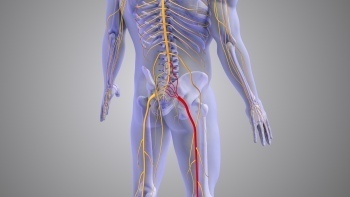
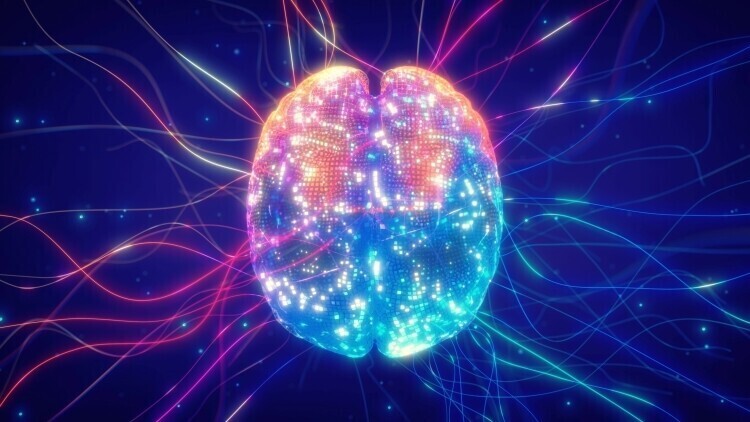





Stretching doesn't just pull on muscle tissue; it actively trains your nervous system, improves proprioception (spatial awareness), and utilizes neuroplasticity to safely increase your range of motion and overall functional strength.
When most people think about stretching, they think of loosening tight muscles or warming up before exercise. While that’s true, stretching actually does much more.
It affects how your brain communicates with your body, improves movement quality, and can even support long-term neurological changes.
Let’s break down what’s really happening inside your body when you stretch—and why it matters for your health.
Stretching Starts in Your Nervous System
To understand what stretching really does, it helps to know two key terms: proprioception and neuroplasticity. Together, they explain why stretching is as much a brain activity as a muscle activity.
What is Proprioception and How Does Stretching Affect It?
Proprioception is your body’s ability to sense where it is in space without looking. It’s what allows you to touch your nose with your eyes closed or walk without looking at your feet.
Inside your muscles and joints are specialized receptors—like muscle spindles, which detect changes in muscle length, and Golgi tendon organs, which detect changes in muscle tension. These receptors constantly send information to your brain about position, tension, and movement.
When you stretch:
- These receptors are stimulated and activated
- Your brain receives updated information about muscle length and joint position
- Your coordination and balance improve over time
- The more accurately your brain understands your body, the better it can control it.

What is Neuroplasticity?
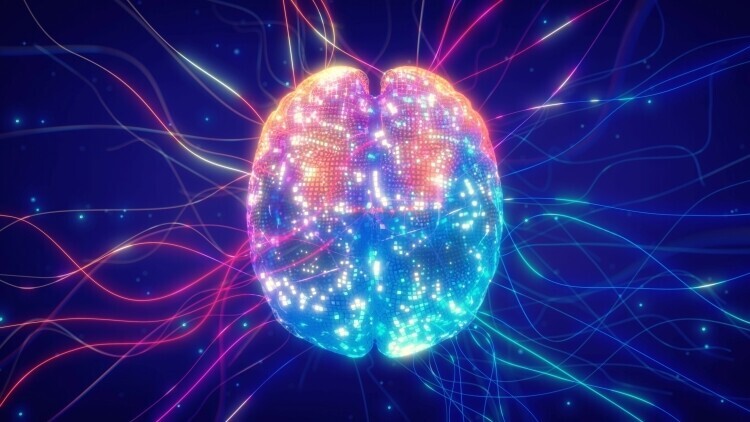
Neuroplasticity is the brain’s ability to adapt, reorganize, and form new neural pathways based on fresh experiences and input. Every time you stretch deliberately and consistently, you send a wave of sensory data up your spinal cord to your brain. That repeated, intentional movement is exactly the kind of input that triggers neuroplasticity—in other words, you're using your body to train your brain.
What Actually Happens in Your Body When You Stretch?
1. You flood the brain with sensory data
The moment you enter a stretch, your muscle spindles and Golgi tendon organs fire signals up through your central nervous system to the somatosensory cortex—the map in your brain that processes touch, position, and movement.
2. You update your brain's "body map"
If you sit at a desk all day or have an injury, your brain receives very little movement data from certain areas. Over time, the neural map for those stagnant body parts becomes fuzzy or blurred – a phenomenon sometimes referred to as "sensorimotor amnesia."
Stretching acts like a high-definition upgrade for this internal map. By moving your joints through their full ranges of motion, you send clear, crisp data to your brain. The brain uses this input to sharpen its spatial awareness (proprioception), giving it a much more accurate picture of where your limbs are and how they can safely move.
3. You override the "danger" signal
Your brain's primary job is survival, and it naturally maintains a baseline level of protective tension (muscle guarding) to prevent you from tearing something. The first time you try a deep stretch, your nervous system interprets that unfamiliar position as danger and triggers a reflex to contract the muscle.
By holding a stretch safely and breathing through it, you send a message to your brain saying, "We are here, and we are safe."
With repetition, neuroplasticity allows your brain to:
- Gradually raise its threshold for what counts as a "dangerous" position
- Dial down the protective, automatic tension
- Reinforce a new, more relaxed baseline for that muscle
4. You improve motor control and efficiency
As the communication pathways between your brain and muscles get stronger and better insulated (a process called myelination), your motor control improves. Your brain no longer has to fight against tight, guarding muscles.
It learns which muscles to relax and which to fire, turning stiff, restricted movement into smooth, coordinated motion.
Recent research suggests that proprioceptive input from spinal muscles plays a key role in driving these neuroplastic changes, especially in the brain regions responsible for movement and coordination.
What Happens to Your Range of Motion When You Stretch?
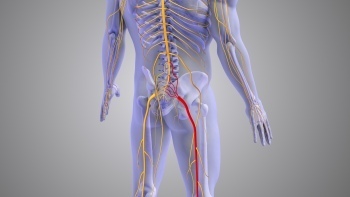
Here's the surprising part: gaining flexibility is less about physically lengthening muscle and more about teaching your nervous system that a new position is safe. When you stretch, you aren't just stretching your muscles—you are sending a massive wave of sensory data up your spinal cord to your brain.
This consistent, deliberate movement triggers neuroplasticity, which is the brain’s ability to adapt, reorganize, and form new neural pathways based on fresh experiences and inputs.
When you stretch consistently:
- Your brain becomes less resistant to end-range positions
- Muscle guarding decreases
- Movement feels easier and more natural
So your improved range of motion comes mainly from:
- Reduced protective tension
- Improved neuromuscular coordination
- Better proprioceptive feedback
It's not about forcing change. It's about teaching your body that movement is safe.
Can Regular Stretching Actually Make Your Muscles Stronger?
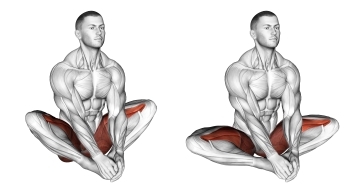
Stretching is often seen as the opposite of strengthening—but the two are more connected than you may realize.
By improving proprioception and neuromuscular control, stretching can:
- Enhance muscle activation
- Improve joint stability
- Support better movement mechanics
When your brain can accurately sense and control a joint:
- Muscles fire more efficiently
- Strength gains become more functional
- Risk of injury decreases
In other words:
Better awareness leads to better strength.
What is the Difference Between Spinal Stretching and Stretching Your Extremities?
While stretching any part of your body sends valuable data to your brain, spinal stretching and stretching your extremities (your arms and legs) impact your nervous system and movement mechanics in entirely different ways.
The primary difference lies in the density of your body's internal sensors and how your brain prioritizes that information.
In the spine:
- Deep stabilizing muscles provide dense sensory input
- Stretching helps improve posture and coordination
- Neuroplastic changes can influence whole-body movement patterns
In the extremities (arms and legs):
- Joint receptors and muscle sensors provide similar feedback
- Stretching improves coordination, balance, and control
- Movement efficiency improves in daily activities and exercise
Whether you’re stretching your hamstrings, shoulders, or lower back, you’re:
- Feeding your brain valuable information
- Reinforcing better movement patterns
- Supporting long-term function and resilience
Why This Matters for Your Health
Stretching isn’t just about flexibility. It’s about communication.
When your brain and body communicate clearly:
- Movement becomes easier
- Pain can decrease
- Strength becomes more effective
- Injury risk is reduced
And perhaps most importantly:
Your body becomes more adaptable over time.

If you think of stretching as “training your nervous system” rather than just “lengthening muscles,” you’ll start to see its true value.
If chronic tightness is limiting your mobility, stretching alone might not resolve the underlying joint restriction. Book a mobility assessment with our Mandeville chiropractic team to find the root cause.
Timothy Cunningham
Contact Me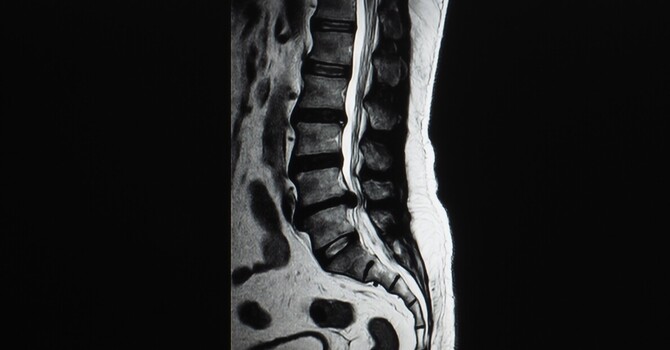


.png)
